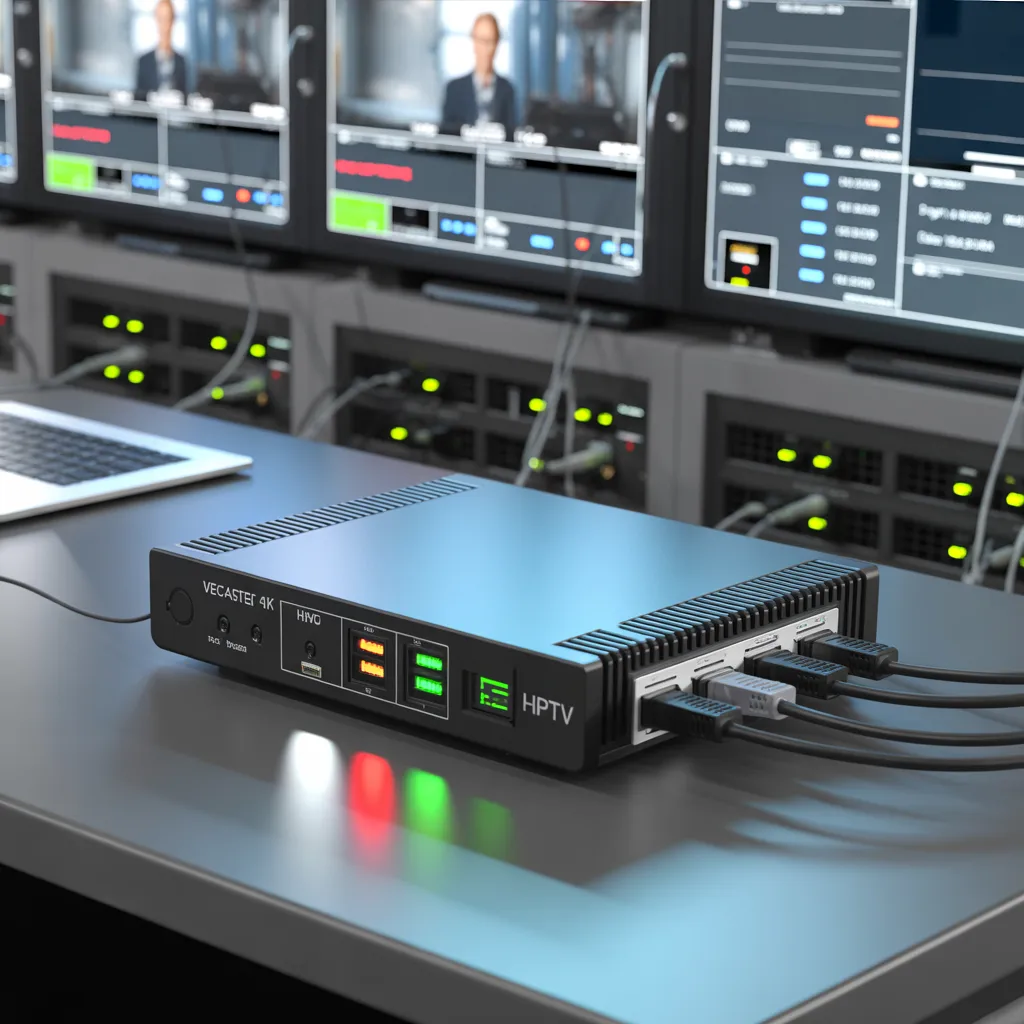
A Vecaster-4K HEVC HDMI IPTV encoder is a professional video encoding device that converts HDMI video signals into compressed HEVC (H.265) streams for IPTV broadcasting, live streaming, and digital distribution with high quality and low bandwidth usage.
Introduction to the Vecaster-4K HEVC HDMI IPTV Encoder
The Vecaster-4K HEVC HDMI IPTV encoder is becoming an essential tool for broadcasters, IPTV providers, content creators, and system integrators who need reliable and efficient video streaming solutions. This hardware encoder converts HDMI video signals into high-quality IPTV streams using HEVC compression, allowing users to deliver ultra-HD content while reducing bandwidth costs.
As IPTV technology continues to grow, professional encoding devices like the Vecaster encoder help organizations achieve stable streaming, improved compression efficiency, and scalable video distribution systems. Whether you’re running a TV headend, managing hotel IPTV systems, or streaming live events, this encoder provides the performance required for modern video delivery.
In this complete guide, you’ll learn everything about the Vecaster-4K HEVC HDMI IPTV encoder, including features, benefits, setup methods, use cases, and best practices.
What is a Vecaster-4K HEVC HDMI IPTV Encoder?
A Vecaster-4K HEVC HDMI IPTV encoder is a hardware device designed to:
- Capture HDMI video input
- Compress the video using HEVC (H.265)
- Convert the signal into IPTV streams
- Deliver content via IP networks
Unlike software encoders, hardware IPTV encoders provide:
- Better stability
- Lower latency
- Continuous 24/7 operation
- Professional broadcast quality
Key Functions of an IPTV Encoder
A professional IPTV encoder like Vecaster typically performs these functions:
- Video capture from HDMI sources
- Video compression using HEVC codec
- Audio encoding
- Stream packaging (RTSP, RTMP, HLS, UDP)
- Network transmission
Learn more about IPTV fundamentals:
[Link to related article on IPTV architecture]
Why HEVC Matters in IPTV Encoding
One of the biggest advantages of the Vecaster-4K HEVC HDMI IPTV encoder is HEVC compression technology.
What is HEVC (H.265)?
HEVC stands for High Efficiency Video Coding. It is the successor to H.264 and offers:
- 50% lower bandwidth usage
- Better 4K streaming support
- Higher compression efficiency
- Improved video quality at lower bitrates
HEVC vs H.264 Comparison
| Feature | HEVC (H.265) | H.264 |
|---|---|---|
| Bandwidth usage | Lower | Higher |
| Compression | Advanced | Standard |
| 4K support | Excellent | Limited |
| Storage requirements | Reduced | Larger |
| CPU usage | Higher | Lower |
Because of these advantages, most modern IPTV providers prefer HEVC encoding solutions.
External technical reference:
[Link to MPEG video compression standards documentation]
Main Features of the Vecaster-4K HEVC HDMI IPTV Encoder
The Vecaster-4K HEVC HDMI IPTV encoder stands out because of its professional capabilities.
Core Technical Features
Typical features include:
- 4K HDMI input support
- HEVC / H.265 compression
- H.264 compatibility
- Multiple streaming protocols
- Web management interface
- Low latency encoding
- Audio encoding (AAC/MP3)
- Bitrate control
- Network streaming support
Advanced Streaming Features
Many deployments benefit from:
- Multi-bitrate streaming
- Adaptive streaming output
- Stream redundancy
- Multicast support
- Unicast streaming
- VLAN compatibility
These capabilities make the device suitable for professional IPTV infrastructures.
Key Benefits of Using a Vecaster-4K HEVC HDMI IPTV Encoder
1. Bandwidth Optimization
Because HEVC reduces file size, you can:
- Stream more channels
- Reduce network congestion
- Lower CDN costs
- Improve network performance
2. Professional Video Quality
The encoder maintains:
- Sharp video details
- Accurate colors
- Smooth motion
- High resolution output
3. Reliability for Continuous Operation
Hardware encoders are built for:
- 24/7 streaming
- Broadcast environments
- Mission-critical installations
4. Flexible Integration
The Vecaster-4K HEVC HDMI IPTV encoder can integrate with:
- IPTV middleware
- CDN platforms
- OTT platforms
- Video management systems
Related reading:
[Link to related article on OTT vs IPTV platforms]
Common Use Cases for Vecaster IPTV Encoders
Broadcasting Companies
TV broadcasters use IPTV encoders for:
- Channel distribution
- Content contribution
- Remote production workflows
Hotels and Hospitality IPTV Systems
Hospitality environments use these encoders for:
- Guest TV systems
- Information channels
- Advertising displays
- Digital signage networks
Educational Institutions
Schools and universities use IPTV encoders for:
- Lecture streaming
- Campus TV networks
- Distance learning systems
Corporate Streaming
Businesses use encoders for:
- Internal communications
- CEO announcements
- Training videos
- Live events
Live Event Streaming
Perfect for:
- Conferences
- Sports events
- Concerts
- Religious broadcasts
Professional streaming guidelines:
[Link to streaming best practices documentation]
How the Vecaster-4K HEVC HDMI IPTV Encoder Works
Understanding how the encoder operates helps with deployment planning.
Step-by-Step Workflow
The process typically follows these steps:
Step 1 – HDMI Input Capture
Video comes from:
- Cameras
- Media players
- Switchers
- Broadcast receivers
Step 2 – Video Compression
The encoder compresses video using HEVC.
Step 3 – Audio Encoding
Audio is encoded into digital formats such as:
- AAC
- MP3
Step 4 – Stream Packaging
The stream is formatted into:
- RTMP
- RTSP
- HLS
- UDP
- SRT
Step 5 – Network Transmission
The encoded stream is sent to:
- IPTV servers
- Streaming platforms
- CDN networks
Learn more about network streaming:
[Link to related article on video streaming protocols]
Vecaster-4K HEVC HDMI IPTV Encoder Setup Guide
Basic Installation Steps
Setting up the Vecaster-4K HEVC HDMI IPTV encoder usually involves:
Hardware Setup
- Connect HDMI source
- Connect Ethernet cable
- Connect power supply
- Power on device
Network Configuration
Access via:
- Web browser
- Device IP address
- Admin interface
Configure:
- IP address
- Gateway
- DNS
- Streaming destination
Encoder Configuration
Typical settings include:
- Resolution
- Bitrate
- Codec selection
- Frame rate
- Audio settings
Stream Output Setup
Configure output protocols like:
- RTMP for YouTube streaming
- UDP for IPTV networks
- HLS for OTT delivery
Setup reference guide:
[Link to IPTV encoder configuration tutorial]
Best Settings for Optimal Performance
Optimizing encoder settings improves quality and stability.
Recommended Bitrate Settings
For HEVC streaming:
| Resolution | Recommended Bitrate |
|---|---|
| 1080p | 3–6 Mbps |
| 4K | 12–25 Mbps |
| 720p | 1.5–3 Mbps |
Latency Optimization Tips
Reduce latency by:
- Lowering GOP size
- Using CBR mode
- Reducing buffering
- Optimizing network switches
Stability Best Practices
For reliable operation:
- Use dedicated VLANs
- Monitor temperature
- Maintain firmware updates
- Ensure power protection
Network reliability research:
[Link to IEEE network reliability study]
Vecaster-4K HEVC HDMI IPTV Encoder vs Software Encoders
Many users ask whether hardware encoders outperform software encoders.
Hardware Encoder Advantages
Hardware solutions provide:
- Dedicated processing
- Stable encoding
- Low crash risk
- Predictable latency
- Industrial reliability
Software Encoder Advantages
Software encoding may offer:
- Lower startup cost
- Flexibility
- Easy upgrades
- Plugin ecosystems
When to Choose Vecaster Hardware Encoding
Choose the Vecaster-4K HEVC HDMI IPTV encoder when you need:
- Continuous streaming
- Professional installations
- Low downtime
- Broadcast quality
Choose software encoding for:
- Small projects
- Testing environments
- Budget setups
Comparison resource:
[Link to video encoding hardware vs software comparison]
Security Features and Stream Protection
Security is important for IPTV deployments.
Common Security Features
Professional IPTV encoders support:
- Password protection
- HTTPS access
- IP filtering
- Stream authentication
- VLAN segmentation
Best Security Practices
Improve security by:
- Changing default passwords
- Restricting admin access
- Using firewall rules
- Encrypting management access
- Updating firmware regularly
Cybersecurity guidelines:
[Link to NIST cybersecurity best practices]
Troubleshooting Common Issues
Even professional encoders may require troubleshooting.
No Video Signal
Check:
- HDMI cable
- Input resolution
- Source device output
- EDID settings
Stream Not Working
Verify:
- Destination IP
- Port numbers
- Network connectivity
- Protocol configuration
Poor Video Quality
Possible causes:
- Low bitrate
- Network congestion
- Incorrect profile settings
- Packet loss
Device Not Accessible
Try:
- Checking IP address
- Resetting network settings
- Verifying subnet
- Rebooting device
Technical troubleshooting guide:
[Link to IPTV troubleshooting article]
Maintenance Tips for Long-Term Performance
Maintaining your Vecaster-4K HEVC HDMI IPTV encoder ensures longevity.
Regular Maintenance Checklist
Perform:
- Firmware updates
- Temperature monitoring
- Dust cleaning
- Network testing
- Log monitoring
Firmware Updates
Updates provide:
- Security patches
- Feature improvements
- Bug fixes
- Performance upgrades
Monitoring Tools
Use monitoring tools to track:
- Bitrate
- CPU load
- Network throughput
- Stream health
Monitoring reference:
[Link to network monitoring tools article]
How to Choose the Right IPTV Encoder
If you’re comparing models, consider:
Key Selection Criteria
Look for:
- Input resolution support
- Codec compatibility
- Protocol support
- Latency requirements
- Budget constraints
Questions to Ask Before Buying
Ask:
- Do I need 4K?
- How many streams?
- What protocols are required?
- What bitrate is needed?
- What redundancy is required?
Buying guide:
[Link to IPTV hardware buying guide]
Future of IPTV Encoding Technology
IPTV encoding continues evolving.
Emerging Trends
Key developments include:
- AI video optimization
- AV1 codec adoption
- Cloud encoding integration
- Edge encoding
- Ultra-low latency streaming
Why HEVC Remains Important
Despite new codecs, HEVC remains important due to:
- Wide compatibility
- Hardware support
- Proven efficiency
- Industry adoption
Technology evolution reference:
[Link to video codec evolution report]
Frequently Asked Questions (FAQ)
Is the Vecaster-4K HEVC HDMI IPTV encoder good for beginners?
Yes. Although professional, its web interface makes configuration straightforward.
Can it stream to YouTube or Facebook?
Yes, using RTMP streaming.
Does it support multicast IPTV?
Yes, most configurations support UDP multicast.
Can it run 24/7?
Yes. Hardware encoders are designed for continuous operation.
Is HEVC required?
Not required, but recommended for bandwidth efficiency.
More FAQs:
[Link to IPTV FAQ article]
Final Thoughts
The Vecaster-4K HEVC HDMI IPTV encoder is a powerful solution for modern IPTV distribution. Its combination of HEVC compression, professional reliability, and flexible integration makes it an excellent choice for organizations that require dependable video streaming infrastructure.
From broadcasters to hotels and enterprises, this encoder provides the performance necessary for scalable IPTV delivery. With proper configuration and maintenance, it can serve as the backbone of a professional video distribution system.
If you’re planning to deploy IPTV or improve your streaming infrastructure, investing in a reliable HEVC encoder is a smart long-term decision.
Meta Description (155–160 characters)
Professional guide to the Vecaster-4K HEVC HDMI IPTV encoder. Learn features, setup, benefits, and best practices for high-quality IPTV streaming and broadcasting.