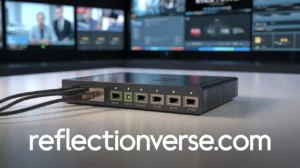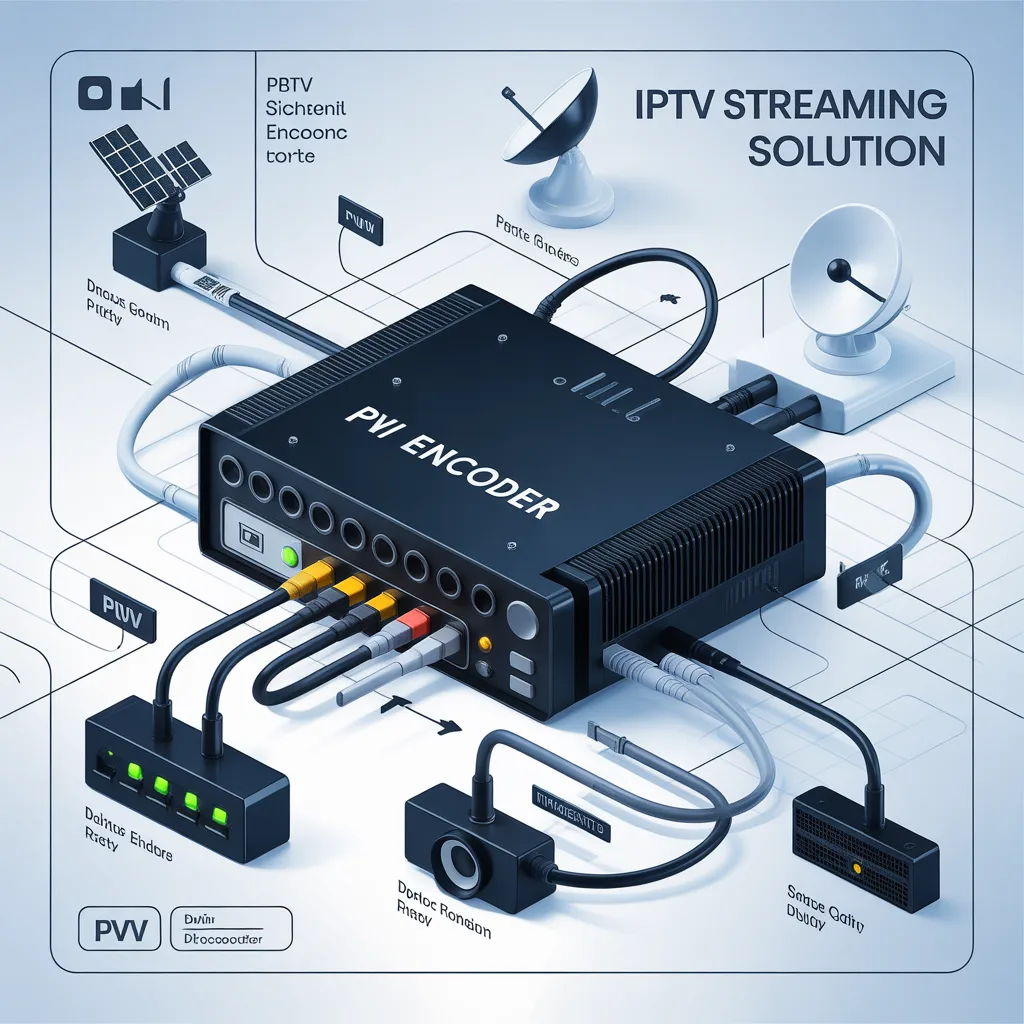

A PVI encoder IPTV is a professional hardware device that converts HDMI, SDI, or AV video signals into IP streams for live broadcasting over IPTV networks. These encoders are widely used in hotels, broadcasting studios, education, security systems, and streaming businesses to deliver stable, high-quality video distribution.
Introduction to PVI Encoder IPTV
A PVI encoder IPTV is one of the most important components in modern video distribution systems. Whether you are running a hotel TV system, a corporate streaming network, or a digital broadcasting setup, IPTV encoders make it possible to transform traditional video signals into network-ready streams.
In simple terms, a PVI encoder IPTV converts video input from sources like:
- Satellite receivers
- Cameras
- Media players
- Set-top boxes
- Computers
Into digital IP streams that can be delivered across a network using protocols such as:
- RTSP
- RTMP
- HLS
- UDP
- HTTP
As IPTV continues to replace traditional coaxial TV distribution, PVI encoders have become essential tools for integrators and streaming professionals.
What is a PVI Encoder IPTV?
A PVI encoder IPTV is a hardware encoder designed to compress video signals using codecs like H.264 or H.265 and distribute them over IP networks.
Simple definition
PVI IPTV encoders convert video signals into compressed digital streams that can be transmitted through LAN, WAN, or the internet.
Core functions of a PVI IPTV encoder
A typical device performs these key tasks:
- Video signal capture
- Video compression
- Stream packetization
- Network transmission
- IPTV protocol formatting
Main input types supported
Most professional PVI encoder IPTV devices support:
- HDMI input
- SDI input
- CVBS input
- VGA input
- Audio embedding
This flexibility makes them ideal for many industries.
How a PVI IPTV Encoder Works
Understanding how a PVI encoder IPTV works helps you choose the right model and configure it correctly.
Step-by-step workflow
Here is the typical encoding process:
Step 1 – Video Input
The encoder receives video from:
- Satellite decoder
- Camera system
- Computer output
- Digital signage player
Step 2 – Compression
The encoder compresses the video using:
- H.264 (standard efficiency)
- H.265 (high efficiency)
Compression reduces bandwidth usage while maintaining quality.
Step 3 – Encoding
The device converts the signal into IPTV formats like:
- MPEG-TS
- SRT
- RTMP
- HLS
Step 4 – Network Transmission
The encoded stream is transmitted through:
- Ethernet network
- IPTV middleware
- Streaming servers
- CDN platforms
Step 5 – Playback
The stream can be viewed on:
- Smart TVs
- IPTV set-top boxes
- Mobile apps
- Video players
- Hotel TV systems
Key Features of PVI IPTV Encoders
When choosing a PVI encoder IPTV, certain features determine performance and reliability.
Essential features to look for
1. Video codec support
Modern encoders support:
- H.264 AVC
- H.265 HEVC
- MPEG-4
H.265 is preferred because it reduces bandwidth by up to 50%.
2. Resolution support
Typical supported resolutions include:
- 720p
- 1080p
- 4K (select models)
3. Bitrate control
Professional PVI encoder IPTV devices allow:
- CBR (constant bitrate)
- VBR (variable bitrate)
- Adjustable bitrate profiles
4. Multi-stream output
Advanced encoders can output multiple streams such as:
- Main stream
- Sub stream
- Mobile stream
5. Protocol compatibility
Important supported protocols:
- UDP multicast
- RTSP unicast
- HTTP streaming
- RTMP push
- SRT secure transport
Types of PVI Encoder IPTV Devices
There are different types of PVI encoder IPTV equipment depending on application needs.
Single channel encoders
Best for:
- Small businesses
- Churches
- Schools
- Basic streaming setups
Advantages:
- Low cost
- Easy installation
- Simple configuration
Multi-channel encoders
Used in:
- Hotels
- IPTV headends
- Broadcasting systems
- Hospitals
Advantages:
- Multiple HDMI inputs
- Rack mounting
- Centralized management
- Cost efficiency per channel
4K IPTV encoders
Ideal for:
- Premium broadcasting
- Sports streaming
- Digital signage networks
Benefits:
- Ultra HD quality
- Future-proof infrastructure
- High compression efficiency
Benefits of Using a PVI Encoder IPTV
Using a PVI encoder IPTV offers major advantages compared to traditional RF distribution.
Major benefits include:
1. Network flexibility
IPTV works over:
- LAN networks
- Fiber networks
- Internet infrastructure
This eliminates the need for complex coaxial wiring.
2. High video quality
IP encoding allows:
- HD streaming
- Full HD distribution
- 4K broadcasting
3. Scalability
You can easily expand your system by:
- Adding more encoders
- Adding switches
- Adding IPTV middleware
4. Cost reduction
Long-term savings include:
- Less cabling
- Easier maintenance
- Centralized control
5. Remote management
Most PVI encoder IPTV devices allow:
- Web interface configuration
- Remote firmware updates
- Stream monitoring
- Network diagnostics
Common Applications of PVI IPTV Encoders
A PVI encoder IPTV is used across many industries.
Hospitality industry
Hotels use IPTV encoders for:
- Channel distribution
- Guest entertainment
- Information channels
- Advertising content
[Link to related article on hotel IPTV systems]
Corporate environments
Businesses use IPTV encoders for:
- Internal communications
- Training broadcasts
- CEO announcements
- Digital signage
Education sector
Schools and universities deploy encoders for:
- Lecture streaming
- Campus TV channels
- Distance learning
- Event broadcasting
Healthcare facilities
Hospitals use IPTV for:
- Patient entertainment
- Information channels
- Waiting room displays
Security and surveillance
Encoders are used to stream:
- CCTV systems
- Monitoring feeds
- Security dashboards
How to Choose the Best PVI Encoder IPTV
Selecting the right PVI encoder IPTV depends on several factors.
Key selection criteria
1. Number of channels needed
Ask yourself:
- How many video sources?
- Future expansion plans?
- Redundancy needs?
2. Required video quality
Consider:
- HD vs Full HD
- 4K requirements
- Bitrate limits
3. Network capacity
Evaluate:
- Switch capacity
- Bandwidth availability
- Multicast support
4. Protocol compatibility
Make sure the encoder supports:
- Your IPTV middleware
- Your players
- Your CDN
5. Ease of management
Look for:
- Web GUI
- SNMP monitoring
- Remote updates
6. Reliability
Professional IPTV deployments require:
- Stable firmware
- Cooling systems
- Industrial components
[Link to related article on IPTV network design]
PVI Encoder IPTV Installation Guide
Installing a PVI encoder IPTV is typically straightforward.
Basic installation steps
Step 1 – Connect video source
Connect:
- HDMI cable
- SDI cable
- Audio cable
Step 2 – Connect network
Use:
- Gigabit Ethernet cable
- Managed switch
Step 3 – Access web interface
Typical process:
- Find device IP
- Login through browser
- Configure stream
Step 4 – Configure encoding
Set:
- Resolution
- Bitrate
- Codec
- Protocol
Step 5 – Test streaming
Verify playback on:
- VLC player
- IPTV box
- Smart TV
Step 6 – Integrate into IPTV system
Connect to:
- Middleware
- Portal
- Player devices
Best Practices for Optimizing IPTV Encoding Performance
To get the best results from a PVI encoder IPTV, follow professional optimization practices.
Performance tips
Use proper bitrate settings
Recommended bitrates:
- 720p → 2–4 Mbps
- 1080p → 4–8 Mbps
- 4K → 15–25 Mbps
Enable multicast when possible
Multicast reduces bandwidth when streaming to many users.
Use managed switches
Recommended features:
- IGMP Snooping
- VLAN support
- QoS control
Monitor temperature
Ensure:
- Proper ventilation
- Rack airflow
- Stable environment
Keep firmware updated
Firmware updates provide:
- Security patches
- Performance improvements
- Bug fixes
[Link to external IPTV networking best practices guide]
Common Problems and Troubleshooting PVI IPTV Encoders
Even high-quality PVI encoder IPTV devices may encounter issues.
Common problems
Stream buffering
Possible causes:
- Low bandwidth
- High bitrate
- Network congestion
Solutions:
- Reduce bitrate
- Upgrade switch
- Use multicast
No video signal
Check:
- HDMI cable
- Source resolution
- HDCP compatibility
Audio sync issues
Fix by:
- Adjusting audio delay
- Updating firmware
- Checking source timing
Device not accessible
Check:
- IP address conflicts
- Subnet settings
- Firewall rules
PVI Encoder IPTV vs Software Encoding
Some businesses compare hardware and software encoding.
Hardware encoder advantages
A PVI encoder IPTV offers:
- Stable performance
- 24/7 operation
- Low latency
- Dedicated processing
- Industrial reliability
Software encoder advantages
Software solutions offer:
- Lower entry cost
- Flexible deployment
- Easy upgrades
When hardware is better
Hardware wins when you need:
- Professional reliability
- Continuous operation
- Broadcast quality
- Multiple inputs
Security Considerations for IPTV Encoding
Security is critical when deploying a PVI encoder IPTV.
Security best practices
Change default passwords
Always:
- Use strong credentials
- Disable default accounts
Use network isolation
Recommended:
- VLAN separation
- Dedicated IPTV networks
Enable secure protocols
Use:
- SRT
- HTTPS
- Secure RTMP
Monitor network access
Implement:
- Access logs
- Device monitoring
- Network alerts
[Link to external cybersecurity best practices report]
Future Trends in IPTV Encoding Technology
The future of PVI encoder IPTV technology continues evolving.
Key trends include:
AI video optimization
AI is improving:
- Compression efficiency
- Quality enhancement
- Bandwidth optimization
Cloud IPTV integration
Modern encoders support:
- Cloud streaming
- Remote transcoding
- Hybrid IPTV systems
5G broadcasting
5G enables:
- Mobile IPTV delivery
- Low latency streaming
- Remote production
AV over IP growth
The industry is moving toward:
- Fully IP video workflows
- Software-defined broadcasting
- Virtualized headends
Frequently Asked Questions About PVI Encoder IPTV
What is the purpose of a PVI encoder IPTV?
It converts video into IP streams for distribution across IPTV networks.
Can PVI IPTV encoders stream to YouTube?
Many models support RTMP streaming for platforms.
Do I need middleware?
Not always, but middleware improves:
- Channel management
- User interface
- Access control
What bitrate should I use?
Depends on:
- Resolution
- Network speed
- Number of viewers
Are PVI encoders suitable for 24/7 operation?
Yes. Professional PVI encoder IPTV hardware is designed for continuous operation.
Conclusion: Is a PVI Encoder IPTV Worth It?
A PVI encoder IPTV is an essential tool for any professional video distribution environment. From hotels and enterprises to broadcasters and educators, these devices enable scalable, reliable, and high-quality IPTV delivery.
If your goal is to build a professional IPTV infrastructure, investing in a reliable encoder ensures:
- Stable video delivery
- Easy scalability
- Professional management
- Future-ready infrastructure
As IPTV adoption continues to grow globally, encoder technology will remain a critical foundation of modern video networks.
Final Thoughts
Choosing the right PVI encoder IPTV depends on your technical needs, network capacity, and long-term growth plans. By focusing on quality, compatibility, and scalability, you can build a future-proof IPTV system.
If you’re planning a deployment, start with proper design, choose reliable equipment, and follow IPTV best practices to maximize performance.
[Link to related article on IPTV headend architecture]
Call to Action
Ready to build or upgrade your IPTV system?
Start by selecting the right PVI encoder IPTV for your project and ensure your network is ready for professional video distribution.
If you found this guide helpful:
- Subscribe for more IPTV technology guides
- Read our next IPTV equipment comparison article
- Contact us for IPTV deployment advice
- Leave a comment with your questions
Your next step toward a professional IPTV system starts now. 🚀
Meta Description
PVI encoder IPTV complete guide: learn features, benefits, setup, and how to choose the best PVI IPTV encoder for professional video streaming systems.