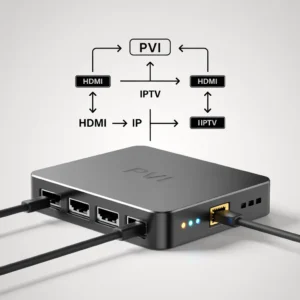
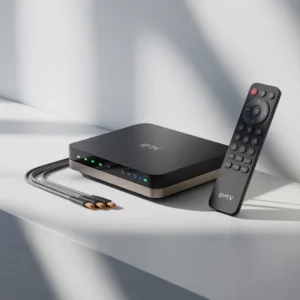
A PVI IPTV encoder HDMI is a professional hardware device that converts HDMI video signals into IP streams for IPTV broadcasting, live streaming, and digital signage. These encoders are widely used in hotels, TV stations, churches, education, and corporate environments to deliver high-quality video over networks efficiently.
Introduction to PVI IPTV Encoder HDMI
A PVI IPTV encoder HDMI is one of the most reliable solutions for converting HDMI video sources into IPTV streams for modern broadcasting environments. Whether you’re distributing content across a hotel network, streaming live events, or building a digital TV headend, this technology provides a stable and scalable solution.
In simple terms, a PVI IPTV encoder HDMI takes video from devices like:
- Satellite receivers
- Cameras
- PCs
- Media players
- Gaming consoles
…and converts the signal into IP streams such as:
- RTSP
- RTMP
- HLS
- UDP
- HTTP
This allows video to be distributed over LAN networks, IPTV systems, or online platforms.
In this expert guide, you’ll learn everything about HDMI IPTV encoders from PVI, including features, benefits, setup methods, and how to choose the right model.
What is a PVI IPTV Encoder HDMI?
A PVI IPTV encoder HDMI is a hardware encoder designed to transform HDMI input signals into compressed digital streams using codecs like H.264 or H.265 (HEVC).
How it works
The process typically follows these steps:
- HDMI source connects to encoder
- Video gets compressed
- Encoder converts video into IP packets
- Stream is sent through network
- IPTV players receive the stream
This makes the device essential for IPTV infrastructure.
Common use cases
Typical applications include:
- IPTV headend systems
- Hotel TV distribution
- Corporate broadcasting
- Live event streaming
- Church broadcasting
- Campus TV networks
- Digital signage networks
For more IPTV fundamentals see:
[Link to related article on IPTV headend systems]
Key Features of PVI HDMI IPTV Encoders
Modern PVI IPTV encoder HDMI devices include professional broadcasting features designed for reliability and flexibility.
Video encoding capabilities
Most PVI encoders support:
- H.264 AVC encoding
- H.265 HEVC encoding
- Full HD 1080p
- Low bitrate optimization
- Constant and variable bitrate
H.265 is especially valuable because it reduces bandwidth consumption by nearly 50%.
Audio support
Audio encoding usually includes:
- AAC
- MP3
- MPEG1 Layer II
This ensures compatibility with IPTV middleware.
Network protocols
A professional PVI IPTV encoder HDMI typically supports:
- RTMP (YouTube / Facebook streaming)
- RTSP (IPTV platforms)
- UDP multicast
- HTTP streaming
- HLS adaptive streaming
Management interface
Most devices include:
- Web management panel
- Remote configuration
- Firmware updates
- Bitrate adjustment
- Resolution control
Learn more about streaming protocols here:
[Link to technical streaming protocol guide]
Advantages of Using a PVI IPTV Encoder HDMI
Choosing a PVI IPTV encoder HDMI offers multiple advantages compared to software encoding or consumer devices.
Reliability
Hardware encoders offer:
- 24/7 operation
- No crashes like PCs
- Stable temperature control
- Industrial components
Low latency streaming
Hardware encoding provides:
- Faster processing
- Reduced buffering
- Real-time delivery
This is important for live events.
Scalability
With multiple encoders you can:
- Add more channels
- Expand IPTV networks
- Scale hotel systems
- Build broadcast infrastructure
Easy integration
They work with:
- IPTV middleware
- Video management systems
- CDN platforms
- Streaming servers
External reference:
[Link to IPTV architecture research paper]
PVI IPTV Encoder HDMI vs Software Encoders
Many beginners wonder whether to choose hardware or software encoding.
Here is a comparison:
| Feature | PVI HDMI IPTV Encoder | Software Encoder |
|---|---|---|
| Stability | Very high | Medium |
| Cost | Medium | Low |
| Maintenance | Minimal | High |
| Power consumption | Low | High |
| Reliability | Professional | Consumer level |
| Latency | Low | Medium |
Hardware wins for professional environments.
Software options like OBS may work for beginners, but enterprises prefer dedicated hardware.
Read more:
[Link to related article on OBS streaming setup]
Technical Specifications to Look For
Before buying a PVI IPTV encoder HDMI, evaluate these specifications.
Input specifications
Check:
- HDMI version
- HDCP compatibility
- Supported resolutions
- Frame rates
Common supported formats:
- 1080p60
- 1080p30
- 720p60
Output options
Ensure support for:
- Multicast
- Unicast
- Dual stream output
- Backup streaming
Compression support
Important codecs:
- H.264
- H.265
H.265 is better for:
- Bandwidth savings
- 4K preparation
- Future IPTV networks
Bitrate control
Look for:
- Adjustable bitrate
- CBR/VBR modes
- Low bitrate optimization
Network connectivity
Most encoders include:
- Gigabit Ethernet
- Web GUI
- SNMP monitoring
Technical documentation reference:
[Link to video compression standards organization]
How to Set Up a PVI IPTV Encoder HDMI
Setting up a PVI IPTV encoder HDMI is usually straightforward.
Basic setup process
Follow these steps:
Step 1 – Connect HDMI source
Connect:
HDMI source → HDMI cable → Encoder HDMI input
Step 2 – Connect network cable
Connect:
Encoder LAN port → Switch → Router
Step 3 – Power device
Turn on the encoder and wait for boot.
Step 4 – Access web interface
Steps:
- Find encoder IP
- Enter IP in browser
- Login to dashboard
Step 5 – Configure stream
Configure:
- Protocol
- Bitrate
- Resolution
- Audio settings
Step 6 – Test stream
Open VLC and test:
Network Stream → Enter URL
Setup tutorials:
[Link to IPTV installation tutorial]
Best Applications for PVI IPTV Encoder HDMI
A PVI IPTV encoder HDMI fits many industries.
Hospitality industry
Hotels use IPTV encoders for:
- Channel distribution
- Information channels
- Promotional TV
- Guest entertainment
Education
Schools use encoders for:
- Lecture streaming
- Campus TV
- Distance learning
- Event broadcasting
Education trends:
[Link to education technology streaming report]
Corporate use
Businesses use IPTV for:
- Internal communication
- CEO broadcasts
- Training programs
- Digital signage
Religious organizations
Churches use encoders for:
- Live worship streaming
- Recording sermons
- Multi-room viewing
Broadcasting
TV operators use PVI devices for:
- Channel contribution
- Signal conversion
- Network distribution
Important Buying Factors
Before choosing a PVI IPTV encoder HDMI, consider these factors.
Number of channels
Ask:
Do you need:
- Single channel encoder?
- Multi-channel encoder?
Codec requirements
Choose:
H.264 if:
- Budget matters
Choose H.265 if:
- Bandwidth matters
- Future expansion planned
Resolution needs
Ask:
Do you need:
- 1080p only?
- 4K ready?
Budget range
Typical ranges:
- Entry level: small deployments
- Mid-range: hotels
- Professional: broadcasters
Support and updates
Check:
- Firmware updates
- Technical support
- Warranty
Buying checklist:
[Link to IPTV equipment buying checklist]
Troubleshooting Common Issues
Even the best PVI IPTV encoder HDMI devices may encounter issues.
Here are common problems.
No video signal
Check:
- HDMI cable
- Source resolution
- HDCP issues
Stream not playing
Verify:
- Stream URL
- Protocol selection
- Firewall settings
High latency
Adjust:
- Bitrate
- GOP size
- Network congestion
Audio problems
Check:
- Audio codec
- HDMI audio output
- Player compatibility
Troubleshooting guide:
[Link to IPTV troubleshooting article]
Best Practices for Using PVI IPTV Encoder HDMI
Follow these professional recommendations.
Use proper network design
Always use:
- Managed switches
- VLAN separation
- QoS configuration
Optimize bitrate
Typical recommendations:
1080p IPTV:
- H.264 → 4–8 Mbps
- H.265 → 2–4 Mbps
Monitor temperature
Install:
- Rack ventilation
- Cooling airflow
- Clean dust filters
Update firmware
Always:
- Install updates
- Patch vulnerabilities
- Improve stability
Security practices reference:
[Link to network security best practices report]
Future Trends in HDMI IPTV Encoding
The future of PVI IPTV encoder HDMI technology is evolving.
Major trends include:
AI video optimization
New encoders include:
- Smart bitrate adaptation
- Content aware encoding
- AI compression
4K adoption
4K IPTV is growing due to:
- Faster networks
- Fiber deployment
- HEVC adoption
Cloud integration
Encoders now connect to:
- Cloud streaming platforms
- CDN providers
- Remote management tools
Industry trends:
[Link to global video streaming market report]
Frequently Asked Questions
What does a PVI IPTV encoder HDMI do?
It converts HDMI video into IPTV streams for network distribution.
Can I stream to YouTube?
Yes, most support RTMP.
Do I need IPTV middleware?
Not always. Simple setups may only require a player.
Is H.265 better?
Yes if bandwidth matters.
How many devices can watch?
Depends on:
- Network capacity
- Server capacity
- Streaming protocol
FAQ reference:
[Link to IPTV FAQ resource]
Who Should Use a PVI IPTV Encoder HDMI?
This technology is ideal for:
Beginners
Those building:
- First IPTV system
- Small streaming network
- Church broadcasting setup
Integrators
System integrators building:
- Hospitality IPTV
- Corporate TV
- Campus networks
Broadcasters
Professionals needing:
- Reliable encoding
- Multi-channel distribution
- Signal conversion
Final Thoughts
A PVI IPTV encoder HDMI remains one of the most important tools in modern video distribution. Its reliability, scalability, and professional performance make it a core component of IPTV networks.
Whether you are building a small IPTV system or a large broadcast infrastructure, choosing the right encoder will determine:
- Stream quality
- Network efficiency
- System stability
- Viewer experience
By understanding features, setup methods, and best practices, you can deploy a successful IPTV solution.
For more guides see:
[Link to complete IPTV beginner guide]
Meta Description
PVI IPTV encoder HDMI guide covering features, setup, benefits, and buying tips. Learn how HDMI IPTV encoders work for professional streaming and IPTV systems.